
Radiant Heating Leak Detection in Harrisburg, PA
Radiant floor heating is a genuinely practical choice in a city with winters as real as Harrisburg's. When that system develops a leak, the tubing runs directly through your floor or slab as part of a closed heating loop, so a leak does not show up as a puddle the way a typical plumbing leak does. It shows up as changes in how your floor heats, or does not heat, in specific areas.
Call for Radiant Heat Diagnostics: +1 (717) 937-9805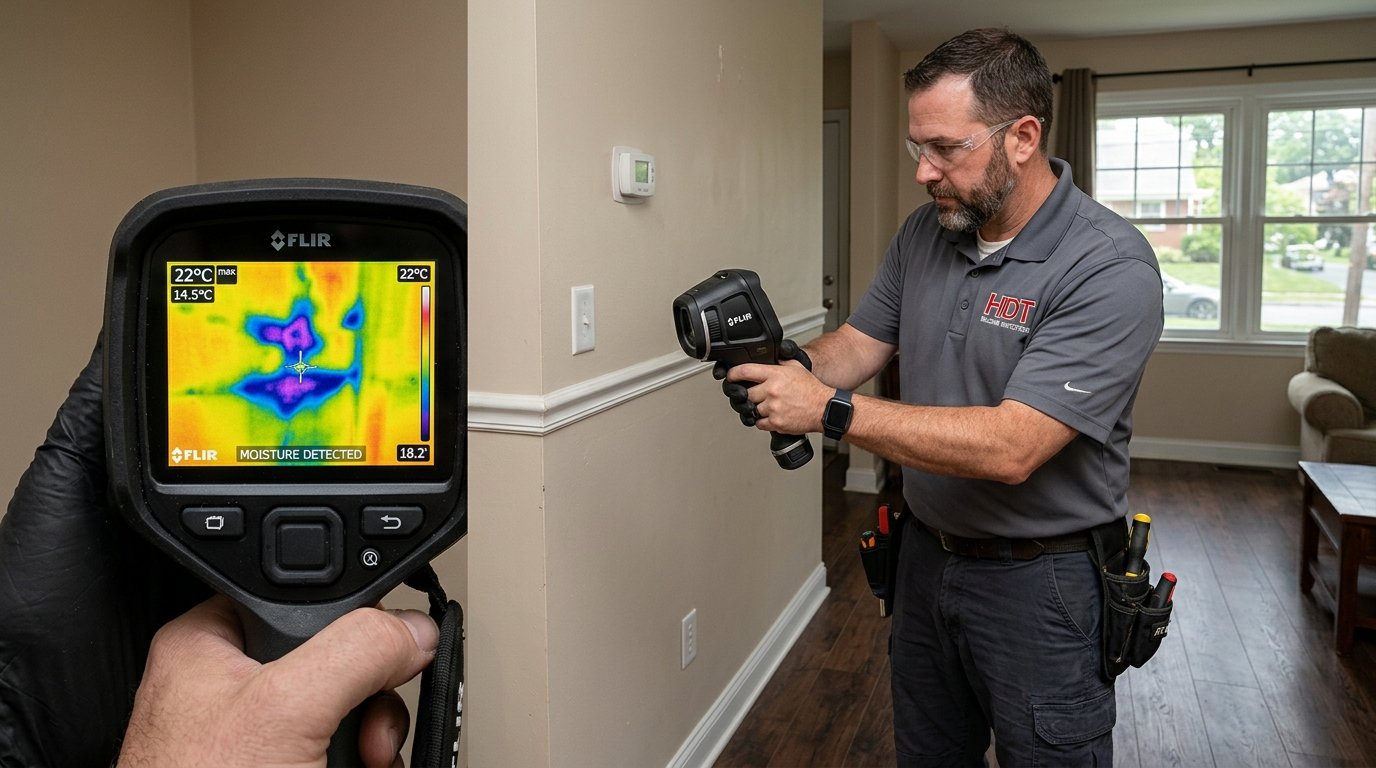
How a Radiant Heating Leak Differs From a Standard Plumbing Leak
Unlike a domestic water line, a radiant heating system operates as a sealed, pressurized loop that circulates the same water continuously rather than delivering fresh water to a fixture. A leak in this loop shows up as a heating problem first, a cold section of floor, a system that will not hold pressure, before it necessarily shows up as visible water damage. Detecting it means understanding the heating system itself, not just locating water the way a standard leak search would.
Signs Your In-Floor Heating System Has a Leak
A Cold Patch of Floor That Should Be Warm
A section of floor that stays noticeably cooler than the rest of a heated area, especially during a Harrisburg winter when the system should be working consistently, often means water is escaping that part of the loop before it can properly circulate.
A Spot That Runs Warmer Than Everywhere Else
Conversely, an unusually warm patch outside the normal heating pattern can indicate water pooling or escaping at a specific point in the tubing.
A System That Keeps Losing Pressure
A closed hydronic loop should hold its pressure over time. If you find yourself repeatedly topping off pressure or your system flags a low-pressure warning, that points toward a leak somewhere in the loop.
A Boiler or Heat Source Working Overtime
If your boiler or heat source is running more often or for longer stretches to maintain the same temperature, water loss from a leak may be forcing the system to work harder to compensate, especially noticeable during a cold snap.
Why These Systems Develop Leaks Over Time
Tubing damage during the original installation, or later from a nail or screw during an unrelated renovation, is one of the most common causes. Fitting failures at the manifold, the central point where individual heating loops connect, are another frequent source. Harrisburg's age as Pennsylvania's capital since 1812 means a meaningful share of the city's properties have systems old enough to use early-generation tubing materials, which are more prone to gradual failure than modern barrier-PEX tubing. Pennsylvania's genuine winter freeze-thaw cycle is a contributing factor as well for systems embedded in a slab, since ground movement can place stress on tubing and fittings over a full heating season.
Locating the Leak Without Tearing Up Your Floor
Finding a leak in a radiant system should not mean tearing up flooring to search for it.
Infrared Thermal Imaging
Thermal imaging is especially effective for radiant systems specifically, since it directly visualizes the heating pattern across your floor, making cold spots, warm spots, and irregular heat distribution immediately visible without any guesswork.
Pressure Testing the Loop
Isolating and pressure testing the affected loop helps confirm a leak exists and narrows down which specific zone is responsible, particularly in a system with multiple heating loops.
Manifold Inspection
A direct inspection of the manifold checks for leaks at the connection points themselves, which are often more accessible than the embedded tubing and a common source of loop pressure loss.
What Comes Next Once the Leak Is Confirmed
Once the leak is located, you receive a clear explanation of which loop or connection is responsible and what repair options are available, whether that involves a manifold repair, isolating and bypassing a damaged section of loop, or another approach suited to your specific system. Learn more about our team.
Why Harrisburg Property Owners Rely On This Service
Detection Always Comes Before Cutting
We use thermal imaging and pressure testing to identify the problem area before recommending any repair, protecting your flooring in the process.
We Understand Harrisburg's Radiant Systems and Winters
Understanding how a real Pennsylvania winter and the range of radiant system ages found across Harrisburg's older and newer properties affect these systems over time helps guide a faster, more accurate diagnosis.
A Clear Report, Not Just a Repair Bill
You receive a clear explanation of what was found and what your repair options actually are, not a vague diagnosis followed by unexplained work.
Radiant Heating Leak Detection Across Harrisburg
This service covers radiant systems throughout Harrisburg's core neighborhoods in 17101 and 17102, extending through 17103 and 17104, and reaching across 17109, 17110, 17111, 17112, 17113, and 17120. We also serve nearby suburbs: Camp Hill →, Mechanicsburg →, Hershey →, Hummelstown →, Middletown →, Lemoyne →, New Cumberland →, and Enola →.
Schedule Radiant Heating Leak Detection in Harrisburg
If you have noticed a cold spot on your floor, an unexplained warm patch, or a heating system that keeps losing pressure, professional detection finds the real source before the problem gets larger. Contact us to schedule an appointment anywhere across Harrisburg.
Call +1 (717) 937-9805